




Table of Contents
1. Introduction: Why Visit Slovakia
Slovakia, located in the heart of Europe, is a country of natural beauty, medieval towns, and rich cultural heritage. Travelers can explore everything from the towering High Tatras mountains to charming old towns, picturesque castles, and traditional villages. Slovakia offers a unique blend of history, adventure, and modern European life.
2. Geography and Climate
Landlocked country bordered by Poland, Czech Republic, Austria, Hungary, and Ukraine.
Predominantly mountainous (Carpathians and High Tatras) with river valleys and plains.
Climate: temperate with four seasons; cold winters ideal for skiing, warm summers for hiking.
3. History of Slovakia
Early History
Settled by Celtic and Slavic tribes.
Part of Great Moravia in the 9th century.
Medieval Kingdoms
Incorporated into the Kingdom of Hungary.
Development of castles, churches, and towns.
Austro-Hungarian Era
Slovakia under Habsburg rule; cultural and architectural influences.
Growth of cities like Bratislava and Košice.
20th Century and Independence
Part of Czechoslovakia until 1993.
Peaceful Velvet Divorce led to the creation of modern Slovakia.
4. Slovak Culture and Traditions
Rich folk traditions in music, dance, and crafts.
Festivals celebrating harvests, religious events, and national holidays.
Importance of community and family life.
5. Language and Religion
Official language: Slovak.
Minority languages: Hungarian, Roma, Czech.
Predominantly Christian (Catholic and Protestant), with other religious communities present.
6. Slovak Cuisine
Staples: potatoes, cabbage, bread, pork, dairy.
Famous dishes: bryndzové halušky (potato dumplings with sheep cheese), goulash, kapustnica (sauerkraut soup).
Desserts: medovník (honey cake), lokše (potato pancakes), trdelník (sweet pastry).
7. Cities and Towns
Bratislava
Capital city on the Danube River, close to Austria and Hungary.
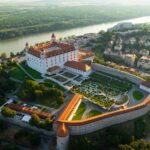
Attractions: Bratislava Castle, Old Town, St. Martin’s Cathedral, UFO Observation Deck.
Košice
Eastern Slovakia’s cultural hub with Gothic architecture.
Highlights: St. Elisabeth Cathedral, Hlavná Street, historical museums.
Banská Bystrica
Mining town with medieval architecture.
Key sites: SNP Square, Central Slovakia Museum.
Prešov
Known for Baroque churches and traditional Slovak culture.
Trenčín
Home to Trenčín Castle overlooking the Váh River.
8. Natural Wonders and Landscapes
High Tatras
Slovakia’s iconic mountain range with peaks over 2,600 m.
Activities: skiing, hiking, mountaineering, and wildlife spotting.
Slovak Paradise National Park
Known for gorges, caves, ladders, and waterfalls.
Orava Castle and Surrounding Areas
Medieval fortress on a hill, with surrounding scenic landscapes.
Demänovská Cave System
Extensive caves with stalactites, stalagmites, and underground rivers.
Danube River and Lowlands
Ideal for river cruises, birdwatching, and cycling.
9. Castles and Historical Sites
Slovakia has over 100 castles and chateaux, including Bojnice Castle, Spiš Castle, and Čachtice Castle.
Each site tells stories of feudal lords, knights, and medieval history.
10. UNESCO World Heritage Sites in Slovakia
Spiš Castle and associated cultural monuments.
Banská Štiavnica and technical monuments.
Vlkolínec folk village.
Wooden churches of the Slovak part of the Carpathian region.
11. Festivals and Events
Bratislava Music Festival (classical music).
Pohoda Festival (modern music).
Folk festivals in regional towns showcasing dance and crafts.
12. Adventure Activities
Hiking and trekking in mountains and national parks.
Rock climbing and mountaineering.
Canoeing and kayaking in rivers.
13. Skiing and Winter Sports
Popular resorts: Tatranská Lomnica, Štrbské Pleso, Donovaly.
Skiing, snowboarding, snowshoeing, and cross-country skiing.
14. Hiking, Cycling, and Outdoor Activities
Extensive hiking trails in High Tatras and Slovak Paradise.
Cycling paths connecting towns and scenic areas.
Wildlife spotting and birdwatching.
15. Traditional Arts, Music, and Dance
Folk music with fujara (traditional shepherd flute).
Traditional dances like the odzemok and verbuňk.
Craftsmanship: pottery, wood carving, embroidery.
16. Handicrafts and Souvenirs
Wooden toys, ceramics, lace, and folklore-inspired clothing.
Local markets and village fairs for authentic souvenirs.
17. Accommodation Options
Luxury hotels in Bratislava and Košice.
Boutique hotels in historical towns.
Guesthouses and mountain lodges near national parks.
18. Transportation and Connectivity
International airports: Bratislava, Košice.
Efficient rail and bus network connecting cities and towns.
Car rental options for exploring rural areas.
19. Shopping and Local Markets
Central European markets offering handicrafts, cheese, and sausages.
Bratislava and Košice have modern shopping malls.
Village markets for authentic Slovak products.
20. Travel Tips and Safety
Slovakia is safe for tourists, with standard European safety standards.
Learn a few Slovak phrases to enhance the experience.
Use cash in smaller towns; cards widely accepted in cities.
21. Cost of Travel in Slovakia
Budget travelers: €30–€50 per day.
Mid-range: €50–€100 per day.
Luxury: €150+ per day.
Affordable public transport and reasonably priced accommodation.
22. Best Time to Visit Slovakia
Spring (April–June): Blooming nature, fewer tourists.
Summer (July–August): Festivals and outdoor activities.
Autumn (September–October): Scenic foliage and wine harvest.
Winter (December–March): Ski resorts and Christmas markets.
23. Sustainable and Eco-Tourism
Emphasis on preserving natural parks and forests.
Eco-lodges and sustainable tourism initiatives.
Encouragement of low-impact activities like hiking and cycling.
24. Sample Itineraries
3-Day Slovakia
Day 1: Bratislava Castle, Old Town, Danube promenade.
Day 2: Trnava and Trenčín Castle.
Day 3: High Tatras day trip.
7-Day Slovakia
Explore Bratislava, Košice, Banská Bystrica, High Tatras, Slovak Paradise, and traditional villages.
Conclusion
Slovakia is a hidden gem in Central Europe, combining stunning nature, medieval history, vibrant culture, and modern cities. From castle tours to hiking adventures, skiing, and traditional culinary experiences, Slovakia offers diverse experiences for every traveler.
FAQs
Q1. What is the capital of Slovakia?
Bratislava, located on the Danube River near Austria and Hungary.
Q2. What language is spoken in Slovakia?
Slovak is the official language; English is widely understood in cities.
Q3. Is Slovakia safe to visit?
Yes, Slovakia is generally very safe for tourists.
Q4. What is Slovakia known for?
Castles, medieval towns, High Tatras mountains, folk culture, and traditional cuisine.
Q5. How can I travel around Slovakia?
By train, bus, or car. Major cities are well-connected; rural areas may require car rental.
Q6. When is the best time to visit Slovakia?
Spring and summer for sightseeing and outdoor activities; winter for skiing.
Q7. What is a must-try dish in Slovakia?
Bryndzové halušky (potato dumplings with sheep cheese) is the national dish.
Q8. Are there UNESCO sites in Slovakia?
Yes, including Spiš Castle, Vlkolínec village, Banská Štiavnica, and several wooden churches.