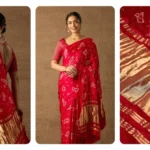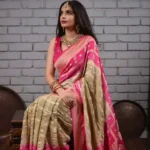








The terms Bandhej and Bandhani frequently appear interchangeable but signify subtly different styles and heritages within India’s timeless tradition of tie-and-dye fabric art. Both terms stem from the practice of binding fabric with thread to create distinctive dotted patterns through intricate dyeing processes. This article unpacks the origins, craftsmanship, cultural relevance, and regional motifs of Bandhej and Bandhani sarees, enriching appreciation for the exquisite art honored by brides and textile enthusiasts all over India and beyond.
Table of Contents
Origins and Etymology
Derived from the Sanskrit “bandh” (to tie or bind), Bandhani is often cited as the umbrella term for the tie-and-dye technique, with Bandhej being a regional variant within Rajasthan. The craft dates back to the Indus Valley Civilization, making it one of the world’s earliest known textile arts. Both styles developed under royal patronage and remain symbols of auspiciousness and prosperity in Indian ceremonies.
The Tie-Dye Technique: Crafting Bandhej and Bandhani
The foundation for both arts lies in tying tiny portions of fabric into knots (ranging from mustard-seed-size in Rajasthan to the finer lentil-size knots in Gujarat) before dyeing. This meticulous binding prevents certain sections from absorbing dye, creating elaborate patterns of dots and motifs after the fabric is dyed and unbound.
Bandhani in Gujarat favors tighter knots, producing denser patterns in playful color schemes, often with multiple rounds of dyeing for layered effects.
Bandhej from Rajasthan employs slightly larger knots, spaced designs, and motifs inspired by palace windows, gardens, and traditional symbols, typically in deep maroons, purples, and ochres.
Regional Variations and Material Choices
Gujarat Bandhani
Known for its dense and intricate dot work arranged in grids.
Common fabrics: cotton, soft georgette for everyday and festive wear.
Colors: vibrant combinations with energetic blends such as pink, green, and orange.
Iconic sarees: Gharchola (wedding saree), Panetar (white and red saree for bridal occasions).
Rajasthan Bandhej
Larger pattern dots with designs like Leheriya (waves) and Mothda (crisscross).
Common fabrics: pure silk, chiffon, malmal, and cotton.
Colors: regal shades including maroon, dark purple, gold-accented borders.
Specialties: festive wear, bridal sarees with traditional motifs and Gota Patti embellishments.
Cultural and Ceremonial Significance
Bandhani and Bandhej sarees are deeply embedded in social and religious life across Western India. Brides from both Gujarat and Rajasthan traditionally wear these sarees, symbolizing marital bliss, fertility, and good fortune. Different patterns and colors carry varied meanings and are chosen carefully based on occasion and region.
Evolution in Modern Fashion
While rooted in tradition, both Bandhej and Bandhani have evolved stylistically and materially for contemporary tastes. Designers mix them with modern fabrics and fusion styles, expanding their reach from traditional ceremonies to everyday wear and high fashion runways.
FAQs About Bandhej and Bandhani
Are Bandhej and Bandhani the same?
They are closely related tie-dye textiles; Bandhani is a broader term from Gujarat, whereas Bandhej refers mostly to the Rajasthani styles with regional motifs and colors.
What fabrics are used?
Bandhani primarily uses cotton and georgette, while Bandhej features silks, chiffon, and malmal as well.
Which colors are traditional?
Bandhani favors bright festive hues; Bandhej leans to royal, deeper shades.
Is one style more intricate than the other?
Gujarat’s Bandhani typically has finer, more detailed knots and denser patterns compared to the bolder Rajasthani Bandhej.
Where are these sarees made?
Bandhani centers include Gujarat’s Jamnagar and Bhuj; Bandhej is made in Jaipur, Udaipur, Jodhpur, and nearby Rajasthan towns.
Conclusion
Bandhej and Bandhani sarees showcase India’s mastery over textile art—each representing a distinct cultural heritage bound by the ancient craft of tie-dye. Their enduring popularity attests to the skill, history, and symbolism woven into every knot and color, captivating brides, artisans, and fashion lovers worldwide.