







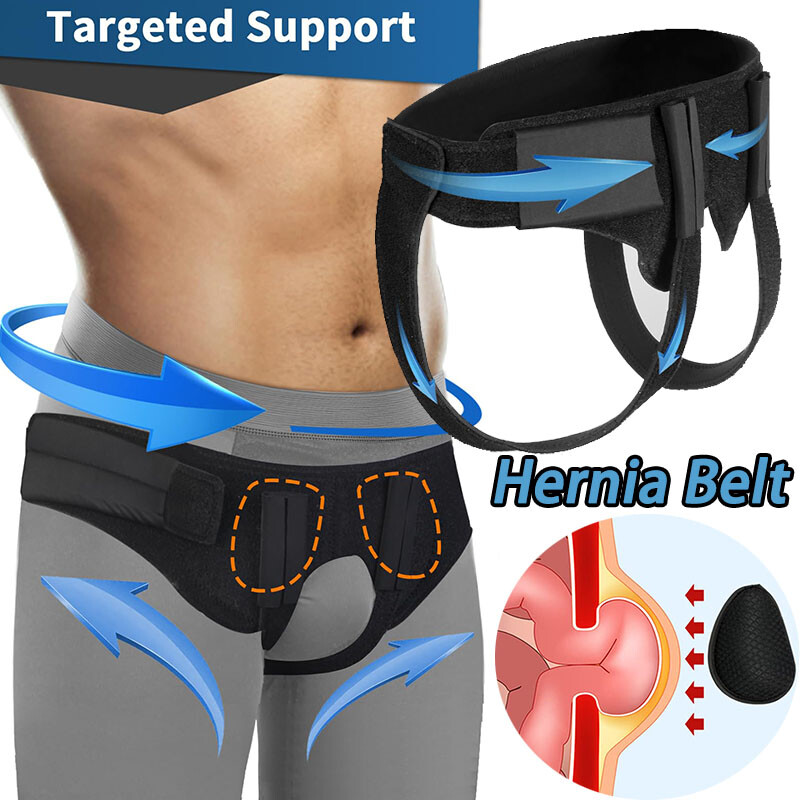
An inguinal hernia belt (commonly called a truss or hernia support) is a garment with an adjustable belt and one or two pads that apply gentle pressure over the hernia site to keep reducible bulges in place and reduce pain during daily activities. The device’s aim is symptom control — decreased bulge, less pain when lifting or walking, and better comfort until definitive treatment (often surgical repair) is possible. Trusses are available as low-profile belts with foam or silicone pads, molded cups, or more substantial abdominal binders depending on the hernia type.
Table of Contents
Medical safety: when to use a belt and when to see a doctor
Important safety points:
Hernia belts provide temporary symptomatic relief, not a cure. Definitive repair for most inguinal hernias is surgical. If your hernia is painful, growing, irreducible (can’t be pushed back in), red, tender, or associated with nausea/vomiting — seek urgent medical attention.
NHS and hospital guidance recommend a truss only after clinical discussion. When prescribed, wear it as instructed (often while upright and remove at night unless otherwise advised). Don’t wear a truss over an unreduced or strangulated hernia. Follow local truss-fitting guidelines.
What to look for — buyer’s guide
When comparing belts, prioritize the following:
Type of pad: foam, silicone, or molded cup. Silicone pads provide firmer, focused pressure; foam pads are softer and more comfortable. Removable pads let you adjust pressure. (Product pages typically list pad types.)
Adjustability: dual straps (waist + groin) allow better placement and pressure control. Hook-and-loop (Velcro) fastening is common.
Materials & breathability: look for cotton blends or breathable fabrics if you’ll wear it long periods; latex-free if you have sensitivities.
Profile under clothing: low-profile designs are more discreet; wide abdominal binders are better post-op but less discreet.
Sizing range: accurate measurement is essential — many manufacturers provide size charts and adjustable ranges. Wrong size reduces effectiveness and increases chafing.
Clinical provenance: look for medical-grade suppliers or hospital-recommended brands if you need post-op support.
Top 10 inguinal hernia belts for men — in-depth reviews
(Each product entry includes features, pros, cons, and who it’s best for. Product pages, hospital stores and retailers referenced where appropriate.)
Note on methodology: I chose belts based on availability across major retailers and medical suppliers, product design features (removable pads, adjustability, fabric), and user/retailer ratings in 2024–2026. For clinical guidance about truss use I referenced NHS, Mayo Clinic and academic hernia center guidance.
1. Tenbon Hernia Belt (popular Amazon / global variant)
Overview: Tenbon’s hernia belt (often sold on Amazon and other marketplaces) is a widely available, low-profile inguinal truss with removable compression pads and a dual strap design so you can target either side. Multiple size options and breathable materials are typical for Tenbon listings.
Key features
Removable pressure pads to apply focal compression.
Dual strap design for waist and groin adjustment.
Breathable stretch fabric; low-profile under clothing.
Available in multiple international marketplaces (Amazon UK/IN/US).
Pros
Affordable and widely available.
Simple to fit and adjust.
Good “entry level” truss for temporary daily use.
Cons
Not a clinically custom-fitted truss — may not be ideal for large or complex hernias.
Some users report variable pad firmness across batches.
Best for: men who want a discreet, economical truss for symptomatic relief during daily activity or while awaiting surgery.
2. Tynor (Tynor / Tynor AHS Inguinal Hernia Belt)
Overview: Tynor manufactures medical supports and has an inguinal hernia belt designed for controlled pressure and comfort. Tynor’s belts are often sold through medical stores and hospital suppliers. The Tynor design emphasizes molded foam pads and controlled compression.
Key features
Molded foam pads for gentler pressure distribution.
Adjustable leg/abdominal straps for a controlled, concealed fit.
Soft, skin-friendly materials suitable for longer wear.
Pros
Good for users who prefer softer, molded pads.
Medical supplier availability — easier to buy from hospital stores.
Cons
Slightly bulkier than minimalist trusses.
Price often higher than generic marketplace brands.
Best for: those wanting a medical-supplier product with good materials and comfort (post-op or daily management).
3. Curad Hernia Belt (Curad ORT224 — classic pharmacy brand)
Overview: Curad is a recognized brand in the US and global pharmacy channels. The Curad hernia belt is a simple, low-profile belt with removable foam compression pads, breathable fabric, and hook-and-loop adjustment. It’s often sold through pharmacy stores and the Mayo Clinic store.
Key features
Removable foam compression pads (mild, steady pressure).
Hook-and-loop adjustable closure.
Latex-free options and multiple sizes.
Pros
Brand reputation and easy replacement pads.
Lightweight & breathable for all-day wear.
Cons
Foam pads may not be firm enough for all hernia sizes.
Not a substitute for orthotist-fitted trusses.
Best for: pharmacy buyers looking for a trusted branded truss with reliable sizing.
4. ORTONYX Premium Umbilical/Hernia Belt
Overview: ORTONYX makes clinical-grade abdominal and umbilical hernia belts; although marketed often for umbilical/abdominal hernias, some ORTONYX models have low-profile pads and are used for localized support. ORTONYX emphasizes removable, anatomically contoured silicone pads and a breathable, latex-free design.
Key features
Anatomically contoured silicone pad (firmer pressure).
Breathable elastic cotton blend fabric.
Low-profile binder shapes for discrete wear.
Pros
Clinical, medical-grade feel; silicone pads allow firmer targeted compression.
Suitable for users who need a stronger local pressure pad.
Cons
More expensive than basic marketplace belts.
Some models are targeted for umbilical/abdominal rather than strictly inguinal hernias.
Best for: users wanting a premium binder with robust, focused pad pressure (e.g., larger or more symptomatic reducible hernias).
5. Everyday Medical Hernia Guard / Inguinal Belt
Overview: Everyday Medical is a popular brand of consumer medical supplies with a range of hernia belts and umbilical supports. Their slim inguinal truss is designed for left or right side support and often rated well for cost-effectiveness.
Key features
Slim profile for discreet everyday use.
Adjustable waist and groin straps; silicone or foam pad variants.
Retail presence via dedicated shops and online marketplaces.
Pros
Good mix of price, comfort and usability.
Designed for everyday wear under clothing.
Cons
Some versions are marketed more broadly (umbilical/abdominal) — check pad placement for inguinal support.
Best for: users seeking balance of cost and discreteness for daily symptom control.
6. Wonder Care Inguinal Hernia Belt
Overview: Wonder Care offers low-cost hernia support belts popular in Asian markets (India, etc.). Their double inguinal designs with removable pads are common on Amazon/Flipkart and local retailers.
Key features
Double pad design for unilateral or bilateral hernias.
Removable compression pads; adjustable straps.
Very affordable price point.
Pros
Extremely accessible and inexpensive.
Many size options across online marketplaces.
Cons
Build quality and long-term durability vary by batch.
Less clinical support compared with medical-grade brands.
Best for: price-sensitive buyers or short-term interim support.
7. HULARA Inguinal Hernia Support Truss
Overview: HULARA is an ecommerce/marketplace brand with low-price hernia truss options sold through Flipkart and other platforms. Products include removable pressure pads and standard adjustability features.
Key features
Removable pressure pads; elastic belt.
Cheap price with frequent discounts on marketplace platforms.
Multiple sizes (S–XXL) for varied waist circumferences.
Pros
Very low cost; easy to replace if worn out.
Many users report acceptable immediate relief.
Cons
Variability in sizing claims and material quality.
Not a substitute for prescription trusses.
Best for: those who want inexpensive trial support or travel backup.
8. Tenbon — alternate/advanced models & marketplace variants
Overview: Tenbon appears in multiple models across regional marketplaces — some variations are marketed as “premium” (different pad shapes, firmer silicone pads). If you like Tenbon’s basic design, consider the variant with molded silicone pad for firmer pressure.
Key features
Multiple pad firmness levels and sizes.
Often available globally via Amazon/marketplaces.
Pros
Choice of firmness & style in the same brand family.
ConsEnsure the specific model you buy matches inguinal use (some are listed as “sports hernia” support).
Best for: buyers who want options within one brand.
Read More – Javitri (Mace): Health Benefits, Uses, Nutrition, and Side Effects
9. Curated premium or clinical options (orthotist-made)
Overview: If generic belts fail to provide the support you need (or you have a large/complex hernia), ask your surgeon or orthotist about a custom or prescription-fitted truss. Hospital orthotics services produce tailored trusses with custom pad placement and pressure control. NHS and other hospital guidance often recommend a professionally fitted truss if non-operative management is chosen.
Key features
Custom pad placement & pressure control.
Higher cost, but improved comfort & efficacy where required.
Best for: complex anatomy, recurrent hernias, or when long-term non-operative management is chosen.
10. Specialty binder alternatives (post-op abdominal binders)
Overview: For post-operative or large ventral hernias, wider abdominal binders with broad coverage can be more appropriate than small inguinal trusses. Brands like ORTONYX and Tynor have binder models tailored to post-op recovery. Check product intended use — inguinal belts differ from broad abdominal binders.
Best for: post-surgery recovery, general abdominal support, or ventral/umbilical hernias.
Quick comparison table (high-level)
| Brand / Model | Pad type | Best for | Price range (typical) | Availability |
|---|---|---|---|---|
| Tenbon (standard) | Foam / removable | Everyday inguinal support | $15–$35 | Amazon / online |
| Tynor Inguinal Belt | Molded foam | Medical supplier / comfort | $25–$60 | Hospital stores |
| Curad ORT224 | Foam removable | Pharmacy buyers | $20–$40 | Pharmacies, Mayo Clinic store |
| ORTONYX Premium | Silicone pad | Strong targeted compression | $40–$120 | Medical webshops |
| Everyday Medical | Foam / silicone | Slim daily wear | $25–$40 | Medical retailers |
| Wonder Care | Foam | Budget buyers | $5–$20 | Local marketplaces |
| HULARA | Foam | Budget marketplaces | $5–$15 | Flipkart / marketplace |
| Prescription (Orthotist) | Custom | Complex hernias | $150+ | Hospitals / orthotists |
| Post-op binder (ORTONYX/Tynor) | Wide binder | Post-op support | $30–$90 | Medical suppliers |
(Price ranges approximate and vary by region and vendor; check local sellers for current pricing.) — product pages and regional retailers show typical prices.
How to measure & fit your inguinal hernia belt correctly
Correct fit is essential. Steps:
Measure your waist at the level of the navel or as manufacturer instructs (some belts reference hip circumference). Use a soft tape measure.
Reduce the hernia first: Lie down and gently push the bulge back into place before applying the belt (do this only if it’s reducible and not painful). Several NHS/hospital leaflets emphasize that the hernia must be reduced before fastening the truss.
Place pad over hernia site: Position the pressure pad directly over the hernia when it’s reduced. A pad placed off-center reduces effectiveness and can cause slippage.
Adjust tension: Tighten until the hernia feels controlled but breathing is easy — do not over-compress. If you feel numbness, severe pain, or discoloration, remove the belt and seek attention.
Test with movement: Walk and perform light activity; if the pad shifts or chafes, re-adjust. Recheck fit daily.
Daily use tips, skin care & maintenance
Wear a thin layer of cotton between the skin and the belt if chafing occurs. Use talc/powder to reduce friction if recommended by your clinician. NHS guidance suggests measures to reduce chafing and maintain skin health with truss use.
Remove the truss overnight unless advised otherwise. Prolonged, continuous tight compression can cause skin breakdown.
Wash belts per manufacturer instructions. Hook-and-loop fasteners should be closed during washing to avoid snagging. Replace worn pads that lose shape.
If pain or growth of the bulge occurs despite truss, contact your surgeon — a truss is not a substitute for surgical assessment.
Alternatives to belts and long-term care
Surgical repair is the only definitive treatment for most symptomatic inguinal hernias. Discuss laparoscopic vs open repair with your surgeon. Recovery typically takes several weeks.
Lifestyle measures like avoiding heavy lifting, managing constipation, and weight maintenance can reduce symptoms. NHS patient leaflets recommend conservative measures while awaiting surgery.
Physical therapy for core strengthening may be recommended as an adjunct but will not fix the hernia.
Read More – Transforming Healthcare with LexMyChart
FAQs
Q1: Do hernia belts cure an inguinal hernia?
A1: No. Hernia belts only provide temporary symptom relief and support. Surgery is usually required to repair the defect permanently.
Q2: Can I wear a hernia belt 24/7?
A2: Not generally recommended. Follow clinician advice. Many guidelines suggest removing at night unless told otherwise, to allow skin rest and because prolonged compression can cause problems.
Q3: Is a silicone pad better than foam?
A3: Silicone pads offer firmer, more focused pressure; foam pads are softer and may be more comfortable. Choice depends on how much focal pressure you need and skin sensitivity.
Q4: Can a hernia become strangulated while wearing a truss?
A4: Strangulation is a clinical emergency and can occur regardless of truss use. If you develop sudden severe pain, redness, vomiting, or inability to pass gas/stool, seek urgent care. Guides stress not to use a truss over an unreduced/strangulated hernia.
Q5: Which brand is best for post-op recovery?
A5: Wider abdominal binders from medical brands (e.g., ORTONYX, Tynor) are commonly used post-op. Check your surgeon’s recommendation.
Q6: Are there prescription trusses?
A6: Yes — orthotists and hospital services can supply prescription trusses with custom fitting for better efficacy in complex cases.
Q7: How should I wash my belt?
A7: Follow manufacturer instructions. Typically, gentle hand wash, air dry; close Velcro before washing to protect materials.
Q8: Can women use these belts?
A8: Some belts are unisex; however, design and pad placement vary — choose a belt specifically designed for your anatomy.
Q9: Will a truss stop a hernia from getting bigger?
A9: Evidence is limited — trusses may reduce symptoms and keep the hernia reduced temporarily, but they don’t reverse the defect or reliably stop progression. Discuss monitoring with your clinician.
Q10: What’s the difference between inguinal and umbilical belts?
A10: Inguinal belts target the groin area; umbilical belts cover the belly-button region. Do not substitute one for the other without confirming pad placement.
Q11: Can I exercise while wearing a hernia belt?
A11: Light exercise may be possible; avoid heavy lifting. Discuss with your surgeon or physiotherapist and test how the belt performs during movement.
Q12: Can a truss hide the need for surgery and cause delays?
A12: A truss can mask symptoms but not treat the underlying defect. Regular clinical follow-up is important to avoid delaying necessary surgery.
Q13: Will insurance cover a hernia belt?
A13: Coverage varies by insurer and country. Durable medical equipment policies sometimes cover medically prescribed trusses — check with your insurer.
Q14: Are over-the-counter belts safe?
A14: OTC belts are safe for short-term symptom control when used per instructions — but check with your clinician if you have doubts or any complications.
Q15: How long before surgery can I wear a truss?
A15: Many patients wear a truss for weeks to months while awaiting elective surgery. Always confirm with your surgeon.
Q16: How often should I replace pads?
A16: Replace pads when they lose shape or firmness, or if they become cracked or cause skin irritation.
Q17: Can a truss prevent recurrence after surgery?
A17: No — recurrence prevention is a surgical issue. Post-op binders can help comfort during recovery but are not a guarantee against recurrence.
Q18: Is there a truss that works for sports hernia?
A18: Sports hernia (athletic pubalgia) is a different condition. Specialized compression shorts and sports physiotherapy are often used; consult a sports medicine specialist.
Q19: Are there side effects?
A19: Possible skin irritation, chafing, or discomfort from excessive compression. Stop using and consult clinician if you experience numbness, increasing pain, or skin breakdown.
Q20: Can I wear a truss while flying?
A20: Yes, many users do, but ensure it’s comfortable and you can access medical care if symptoms worsen.
Sources & further reading
Mayo Clinic — Inguinal hernia: Diagnosis and treatment. Includes overview of hernia types and treatment options.
NHS / hospital leaflets — Guidelines on truss use, fitting and warnings (multiple NHS trusts).
Washington University — Are hernia belts effective? (clear explanation that belts are temporary).
Product pages and retailer listings: Tenbon (Amazon), ORTONYX product page, Curad hernia belt (Mayo Clinic store & retailers), Tynor product pages and hospital suppliers, Wonder Care and HULARA marketplace listings.