






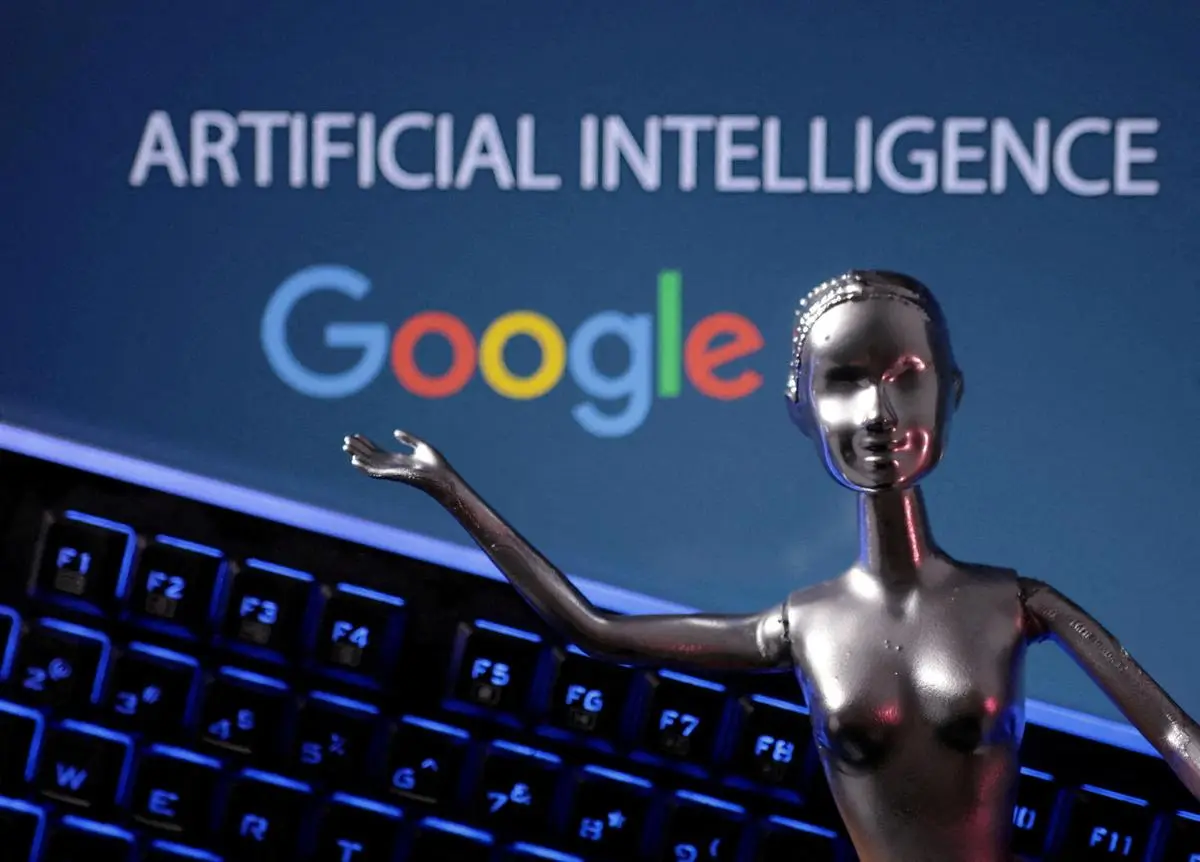
The artificial intelligence race has entered a new era in 2026. After years of intense competition, Google has dramatically accelerated its AI strategy and now appears to be pulling ahead of OpenAI in multiple critical areas — research innovation, enterprise adoption, global infrastructure, multimodal intelligence, and revenue growth.
For much of the early 2020s, OpenAI dominated headlines with ChatGPT and GPT-4. However, 2026 is shaping up to be the year Google reclaims leadership in AI. With its Gemini Ultra 3 model, deep integration across its ecosystem, and unmatched cloud infrastructure, Google’s explosive AI growth is redefining the global tech landscape.
Let’s explore how Google went from playing catch-up to leading the AI revolution.
Table of Contents
1. The AI Race: A Quick Background
The competition between Google and OpenAI intensified in 2023 when generative AI became mainstream. OpenAI’s ChatGPT gained unprecedented adoption, forcing Google to accelerate its internal AI roadmap.
Google had AI capabilities long before ChatGPT — including DeepMind, TensorFlow, and groundbreaking transformer research — but it was initially slower in public deployment. The launch of Bard (later rebranded under Gemini) marked Google’s direct entry into conversational AI.
Fast forward to 2026, and the tables have turned.
2. Gemini Ultra 3: The Turning Point
The major catalyst behind Google’s explosive growth is Gemini Ultra 3, released in late 2025 and widely adopted in 2026.
Key Advantages of Gemini Ultra 3:
Superior multimodal understanding (text, image, video, code, and audio)
Advanced reasoning benchmarks outperforming GPT models
Real-time contextual memory across Google services
Optimized cost-efficiency for enterprises
Native integration into Android, Chrome, Gmail, Docs, and Cloud
Unlike standalone AI systems, Gemini is deeply embedded into Google’s ecosystem. That integration has become a strategic weapon.
3. AI Everywhere: Google’s Ecosystem Advantage
OpenAI primarily operates as a platform provider. Google, however, owns:
Android (3+ billion devices)
Chrome browser
Google Search
Gmail
Google Workspace
YouTube
Google Cloud
In 2026, Gemini AI is seamlessly integrated across all these services.
Examples of Real-World Integration:
Gmail auto-drafts emails with contextual awareness.
Google Docs builds full reports from short prompts.
YouTube AI generates automatic summaries and clips.
Android phones provide real-time AI assistants offline.
Google Search delivers AI-powered dynamic answers.
This level of integration created exponential daily usage — something OpenAI struggles to match outside its app and API ecosystem.
4. Enterprise Domination Through Google Cloud
Another major growth factor is Google Cloud’s AI infrastructure.
In 2026, enterprise AI adoption skyrocketed. Companies wanted:
Secure AI deployment
Custom AI models
On-premise AI options
Scalable infrastructure
Google leveraged:
Tensor Processing Units (TPUs)
Secure enterprise AI frameworks
Custom Gemini enterprise models
Industry-specific AI solutions (healthcare, finance, retail)
As a result, Google Cloud’s AI division experienced record-breaking revenue growth.
Meanwhile, OpenAI continues relying heavily on partnerships for infrastructure.
5. Cost Efficiency & AI at Scale
One of Google’s most powerful advantages in 2026 is cost efficiency.
Thanks to:
Proprietary TPUs
Energy-efficient data centers
Advanced model optimization
Google reduced AI inference costs significantly.
Lower costs allowed Google to:
Offer free AI tiers to users
Bundle AI in Workspace subscriptions
Provide competitive enterprise pricing
Expand into emerging markets
Cost leadership became a strategic differentiator.
6. Global Expansion & Multilingual Superiority
Gemini Ultra 3 demonstrated exceptional multilingual capabilities.
In emerging markets like India, Southeast Asia, Africa, and Latin America, Google AI adoption surged due to:
Native regional language support
Offline AI capabilities on Android devices
Affordable AI services
OpenAI expanded globally too, but Google’s Android dominance gave it unmatched reach.
In India alone, millions of small businesses adopted Google AI tools integrated into Workspace and Android ecosystems.
7. Research Breakthroughs in 2026
Google DeepMind delivered several breakthroughs:
Improved long-context reasoning
Advanced AI coding systems
AI-powered scientific discovery tools
Protein research advancements
AI-assisted climate modeling
These innovations elevated Google’s reputation beyond generative chatbots into serious scientific AI leadership.
OpenAI continues strong research efforts, but Google’s deep academic and research foundation strengthened its dominance.
8. AI + Hardware Integration
Google’s Pixel devices in 2026 are AI-first smartphones.
Key features include:
On-device Gemini AI
AI-powered photography and video editing
Real-time translation
Context-aware personal assistant
On-device AI processing improved privacy and performance.
OpenAI lacks hardware ownership, giving Google a critical strategic advantage.
9. Regulatory Positioning & Trust
AI regulation tightened in 2025 and 2026.
Governments demanded:
Transparency
Responsible AI usage
Data protection compliance
Regional AI governance
Google leveraged decades of compliance experience to adapt quickly.
Enterprise clients felt more confident deploying Google AI compared to newer AI companies.
Trust became a growth accelerator.
10. Developer Ecosystem Growth
Google expanded:
Gemini APIs
AI Studio
No-code AI builders
AI agent frameworks
Developers increasingly chose Google Cloud due to pricing, scalability, and ecosystem tools.
OpenAI remains strong among startups, but Google gained traction among enterprise-scale developers.
11. Revenue & Market Impact
By 2026:
Google’s AI revenue experienced double-digit growth.
Google Cloud AI subscriptions surged.
AI features boosted ad targeting efficiency.
Workspace AI upgrades increased subscription revenue.
AI is no longer experimental for Google — it’s a core revenue engine.
12. Is OpenAI Falling Behind?
OpenAI remains innovative and influential.
However, challenges include:
Infrastructure dependency
Limited hardware ecosystem
Higher operational costs
Increasing competition
While OpenAI remains a major player, Google’s diversified AI ecosystem provides resilience and scale.
13. The Future of the AI Battle
The AI race is far from over.
Potential future areas of competition:
Artificial General Intelligence (AGI)
AI-powered robotics
AI-driven operating systems
Personalized AI agents
AI healthcare solutions
Google’s momentum in 2026 signals a powerful shift, but innovation cycles remain rapid.
14. Why 2026 Marks a Turning Point
2026 may be remembered as the year:
Google fully mobilized its AI infrastructure.
Gemini matured into a dominant platform.
AI became seamlessly embedded into daily digital life.
Enterprise AI adoption reached mainstream scale.
Google didn’t just build a chatbot. It built an AI ecosystem.
That ecosystem advantage changed the game.
Conclusion
Google’s explosive AI growth in 2026 represents a strategic masterclass in scale, integration, and infrastructure dominance.
From Gemini Ultra 3 to AI-powered Android devices, from enterprise cloud solutions to multilingual global expansion, Google has leveraged its ecosystem advantage to pull ahead in the AI race.
While OpenAI remains a formidable competitor, 2026 clearly shows that AI leadership is not only about model performance — it’s about distribution, cost efficiency, trust, and ecosystem integration.
The AI war continues — but for now, Google leads the charge.
FAQs
1. Why is Google leading in AI in 2026?
Google leads due to Gemini Ultra 3 advancements, ecosystem integration, enterprise cloud dominance, and cost-efficient infrastructure.
2. Is OpenAI still competitive in 2026?
Yes. OpenAI remains innovative, especially in research and API services, but faces scaling and ecosystem challenges.
3. What is Gemini Ultra 3?
Gemini Ultra 3 is Google’s advanced multimodal AI model launched in late 2025, dominating benchmarks and enterprise deployment in 2026.
4. How does Google’s ecosystem help AI growth?
Integration across Android, Chrome, Gmail, Workspace, and YouTube ensures massive daily AI usage.
5. Does Google AI work offline?
Yes, certain Gemini features run directly on Pixel and Android devices using on-device AI processing.
6. How is Google Cloud contributing to AI growth?
Google Cloud provides enterprise AI infrastructure, TPUs, scalable deployment, and industry-specific AI solutions.
7. What markets are driving Google’s AI growth?
Emerging markets like India, Southeast Asia, Africa, and Latin America are major growth drivers.