







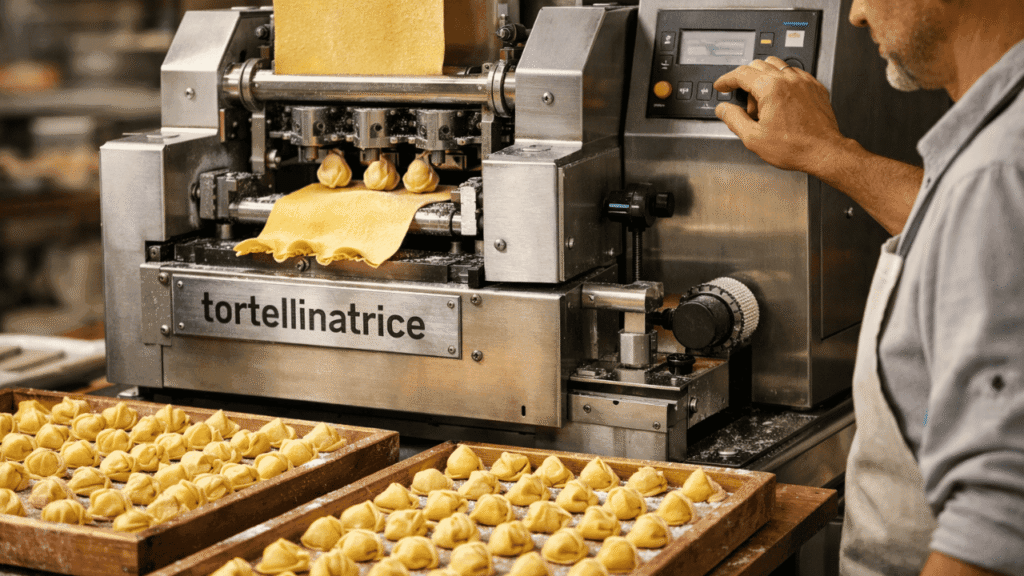
Italian cuisine is celebrated worldwide for its simplicity, depth of flavor, and strong connection to tradition. Among its most cherished culinary treasures is tortellini, a small, ring‑shaped stuffed pasta that originated in the Emilia‑Romagna region, particularly Bologna and Modena. For centuries, tortellini were shaped entirely by hand, a painstaking process requiring patience, dexterity, and years of experience.
As demand for fresh pasta grew beyond family kitchens and small trattorias, the need for innovation became unavoidable. This is where the Tortellinatrice emerged—a machine that respects tradition while embracing efficiency. The Tortellinatrice has not replaced Italian culinary heritage; instead, it has safeguarded it by allowing artisans, restaurants, and pasta producers to meet modern needs without sacrificing authenticity.
This comprehensive article explores the Tortellinatrice in detail—its origins, design, working mechanism, benefits, cultural importance, and future role in Italian gastronomy.
Table of Contents
The Origins of Tortellini: A Culinary Icon
To understand the importance of the Tortellinatrice, one must first appreciate the cultural weight of tortellini itself.
A Pasta Rooted in Legend
According to popular legend, tortellini were inspired by the navel of Venus, glimpsed by an innkeeper through a keyhole. Whether myth or metaphor, this story reflects the reverence Italians hold for this pasta shape.
Traditionally, tortellini are filled with a mixture of pork loin, prosciutto, mortadella, Parmigiano Reggiano, eggs, and nutmeg. They are folded by hand into their signature shape—small enough to fit on a spoon yet rich enough to define a meal.
The Labor‑Intensive Craft
Hand‑making tortellini requires precision:
- Rolling pasta dough extremely thin
- Cutting uniform squares
- Filling each piece consistently
- Folding and shaping each tortellino individually
A skilled pasta maker may shape thousands in a day, but the process remains physically demanding and time‑consuming. As Italian cuisine gained international popularity, maintaining this artisanal standard became increasingly challenging.
What Is a Tortellinatrice?
The Tortellinatrice is a specialized pasta‑making machine designed specifically to form tortellini. It automates the folding and shaping process while preserving the traditional look and texture of handmade pasta.
Unlike generic pasta machines, the Tortellinatrice is engineered to replicate human hand movements with remarkable accuracy. It ensures consistency in size, filling distribution, and shape—key factors in professional kitchens and commercial pasta production.
The Evolution of the Tortellinatrice
Early Mechanical Experiments
The earliest attempts to mechanize tortellini production appeared in Italy during the mid‑20th century. These rudimentary machines focused on speed but often compromised authenticity.
Technological Refinement
Modern Tortellinatrici (plural) represent decades of refinement. Italian engineers collaborated with pasta artisans to design machines that:
- Handle delicate dough
- Preserve traditional folds
- Avoid crushing or overfilling
Today’s models range from compact countertop units for small kitchens to industrial machines capable of producing tens of thousands of tortellini per hour.
How the Tortellinatrice Works
While designs vary by manufacturer, the basic process remains consistent.
1. Dough Preparation
Fresh pasta dough is prepared separately using flour and eggs (or water, depending on regional style). The dough must be elastic, smooth, and thinly rolled.
2. Filling Integration
The filling—typically meat‑based or cheese‑based—is fed into the machine through a controlled system that ensures uniform portioning.
3. Shaping Mechanism
The Tortellinatrice cuts the dough into precise squares, deposits the filling, folds the pasta, and shapes it into the iconic tortellini form.
4. Output and Quality Control
Finished tortellini emerge ready for cooking, freezing, or packaging. Operators can adjust size, thickness, and filling quantity according to preference.
Types of Tortellinatrice Machines
Manual and Semi‑Automatic Models
These machines are ideal for:
- Small restaurants
- Artisanal pasta shops
- Culinary schools
They require some manual input but significantly reduce labor.
Fully Automatic Industrial Models
Used by large pasta manufacturers, these machines offer:
- High‑volume production
- Minimal human intervention
- Consistent quality at scale
Benefits of Using a Tortellinatrice
Preserving Tradition at Scale
Contrary to common belief, the Tortellinatrice does not diminish tradition. Instead, it allows traditional recipes to reach a wider audience without altering their essence.
Consistency and Precision
Uniform tortellini cook evenly and present beautifully, which is essential for restaurants and premium food brands.
Time and Labor Efficiency
What once took hours can now be achieved in minutes, freeing chefs to focus on creativity and flavor development.
Reduced Physical Strain
Manual pasta shaping is demanding. Machines reduce repetitive strain injuries common among pasta artisans.
The Tortellinatrice in Professional Kitchens
High‑end restaurants and trattorias increasingly rely on Tortellinatrici to maintain consistency during peak service hours. Fresh, house‑made tortellini can be produced daily without exhausting kitchen staff.
Role in Commercial Pasta Production
For pasta brands, the Tortellinatrice is indispensable. It allows:
- Compliance with food safety standards
- Large‑scale production of fresh or frozen tortellini
- Export of authentic Italian pasta worldwide
Cultural Impact and Culinary Debate
Tradition vs. Technology
Purists argue that true tortellini must be handmade. However, many Italian culinary associations recognize machine‑made tortellini as legitimate when traditional recipes and ingredients are respected.
Protecting Culinary Heritage
By making tortellini production sustainable and profitable, the Tortellinatrice helps ensure that this iconic pasta remains part of everyday Italian life rather than a fading artisanal niche.
The Tortellinatrice and Sustainability
Modern machines are designed with sustainability in mind:
- Reduced food waste
- Energy‑efficient motors
- Precise portion control
These factors contribute to responsible food production.
Choosing the Right Tortellinatrice
When selecting a machine, consider:
- Production volume
- Available space
- Budget
- Ease of cleaning and maintenance
- Availability of technical support
Maintenance and Hygiene
Proper cleaning is essential. Most modern Tortellinatrici feature:
- Stainless steel components
- Easy disassembly
- Compliance with international food safety standards
Regular maintenance ensures longevity and consistent performance.
The Future of Tortellini Making
As technology advances, future Tortellinatrici may integrate:
- AI‑based quality control
- Smart sensors for dough consistency
- Greater customization options
The goal remains unchanged: honoring tradition while embracing progress.
FAQs
1. What is a Tortellinatrice?
A Tortellinatrice is a specialized machine designed to shape and produce tortellini efficiently while preserving traditional form and quality.
2. Does machine‑made tortellini taste different?
No. When traditional recipes and quality ingredients are used, machine‑made tortellini are indistinguishable from handmade ones in taste.
3. Can small restaurants use a Tortellinatrice?
Yes. Compact and semi‑automatic models are ideal for small kitchens and artisanal pasta shops.
4. Is the Tortellinatrice only for meat‑filled tortellini?
No. It can be used for cheese, vegetable, and even modern fusion fillings.
5. Are Tortellinatrici expensive?
Prices vary widely depending on size and automation level, ranging from affordable artisanal models to high‑end industrial machines.
6. Is using a Tortellinatrice considered authentic in Italy?
Many Italian professionals accept its use as long as traditional recipes, ingredients, and standards are respected.
7. How many tortellini can a machine produce per hour?
Production capacity varies from a few hundred per hour for small models to tens of thousands for industrial machines.
8. Is maintenance difficult?
No. Modern machines are designed for easy cleaning and routine maintenance.
9. Can the machine be customized?
Yes. Many models allow adjustments in size, thickness, and filling quantity.
10. Will Tortellinatrici replace handmade pasta completely?
Unlikely. Handmade tortellini will always exist, but machines ensure the tradition remains accessible and sustainable.
Conclusion
The Tortellinatrice stands as a powerful symbol of how tradition and technology can coexist harmoniously. Rather than erasing the art of tortellini making, it has ensured its survival in a fast‑paced, globalized world. By enabling consistent quality, reducing labor strain, and expanding accessibility, the Tortellinatrice has revolutionized Italian pasta production while honoring centuries of culinary heritage.
In the end, whether shaped by hand or machine, what truly defines tortellini is respect—for ingredients, technique, and tradition. The Tortellinatrice simply ensures that this respect can endure for generations to come.