







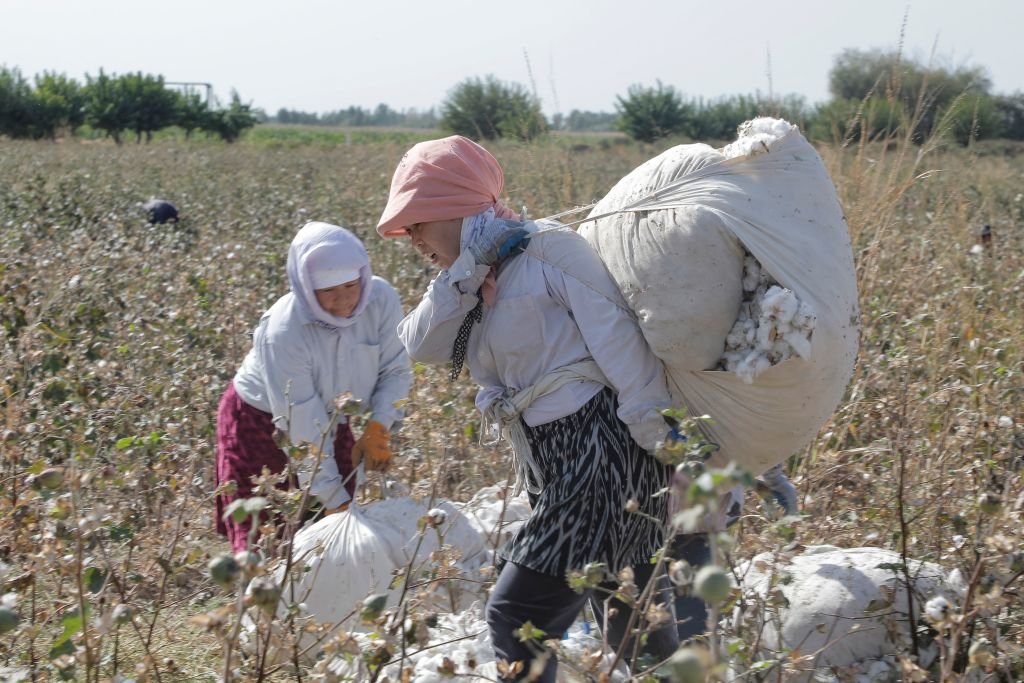
For decades, the Uzbek government forcibly mobilized millions of people, including children, to harvest cotton for state-owned enterprises. The Cotton Campaign, of which the Solidarity Center was a founding member, is a long-running advocacy campaign that in 2021 helped pass reforms and end state-organized labor for cotton workers in Uzbekistan. Solidarity Center is a leading U.S.-based independent nonprofit that works internationally with unions and worker associations to advance democracy, workers’ rights, economic security, and job safety and health.
While the reforms that passed were a milestone achievement, much more work needed to be done to protect cotton workers. In late 2023, the Solidarity Center, together with the Center for International Private Enterprise (CIPE) and Uzbekistan’s Ministry of Employment and Poverty Reduction, launched a two-year cooperation agreement aimed at improving working conditions across all stages of the cotton and textile industry in Uzbekistan, including strengthening transparency, worker protection, and compliance with international labor standards, especially the rights to freedom of association and safe working conditions.
Additional Measures to Improve Working Conditions
Key activities in the cooperative agreement included holding a two-day training session, conducted in partnership with the Solidarity Center, Tashkent Mediation Center, and the State Labor Inspectorate, for workers, managers, and employers on labor rights. The training introduced participants to mediation as an alternative mechanism for resolving labor disputes.
Additionally, informational leaflets about fundamental rights were distributed to workers in the cotton industry. The leaflets provided clear, easy-to-understand information about their rights as seasonal workers, along with hotline and Telegram contacts where they can report problems or get free legal help.
Worker-led grievance and remedy mechanisms were also established to facilitate the reporting and handling of rights violations. Creating stronger channels of dialogue among workers, employers, and the government, along with aligning industry practices with global labor norms, is designed to help Uzbekistan develop a cotton supply chain that is not only competitive but also ethical and sustainable.
The Solidarity Center and CIPE collaborated to provide all workers in the cotton sector with written employment contracts that clearly outline the enforceable working conditions.
Why the Labor Reforms Are Good Beyond Uzbekistan
The reforms implemented in Uzbekistan have far-reaching implications that extend beyond its borders. For U.S. consumers, stronger labor protections for Uzbek workers help ensure that the clothes and home goods we buy are not tied to forced labor or exploitation, a concern that grows more important to shoppers every year. And for U.S. workers, a fairer global supply chain helps level the playing field.
When countries commit to strong labor standards, they help create a fairer global marketplace. As Uzbekistan strengthens protections for its workers, it not only upholds human rights but also contributes to a healthier, more competitive environment for businesses around the world.
About the Solidarity Center
The organization has programs in 60 countries and partners with over 900 organizations and grassroots groups to equip workers with the tools they need to come together to form unions, negotiate, and build a better future.