



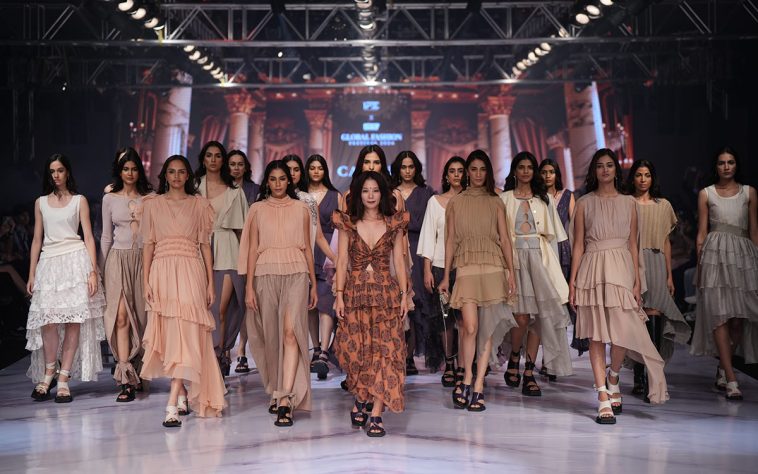
India has been steadily rising as a powerhouse in fashion, infusing its rich heritage, craftsmanship, and culture with global sensibilities. Among the many platforms that have bolstered this rise, Global India Couture Week (GICW.in) stands out for its ambition to blend local talent with international design, fostering creative dialogue while showcasing haute couture, luxury, and craftsmanship.
Global India Couture Week is more than a runway event—it is a destination of fashion, a place for emerging and established designers, a marketplace for ideas, textiles, artistry, and aesthetic expression. It also plays an important part in positioning India as a player in the global couture conversation, not just as a consumer of fashion but as a creator.
Table of Contents
Origins & About GICW
Founding and Organizers
GICW.in is organized by Black Page Fashion Host Pvt. Ltd. (BPFH).
The Managing Director is Satyajit Mohanty, whose background includes hospitality and events. He co-founded GICW.in to provide space for fashion talent, especially in a market where runway opportunities are sometimes limited.
Director Operations is Sidharrth Behera, with experience in event, hospitality, and pageant industries.
Purpose & Vision
GICW aims to create “creative dialogue, trade, and collaboration between regional and international brands and buyers.”
The platform is meant to nurture both young and experienced designers, acting as a bridge for Indian craftsmanship to reach global visibility.
Scale & Reach
According to GICW’s own data, over the seasons there have been: 180+ designers, 8,526 models, 15,476 attendees.
It has multiple seasons; Season 4 is among the recent ones.
Structure & Format
Seasons and Editions
GICW.in has had multiple “seasons” (e.g., Season 1, Season 2, Season 3, etc.), each bringing different themes, designers, and collaborations.
As of one recent season (Season 4), designers included national icons (Neeta Lulla, Rajdeep Ranawat, Lalit Dalmia) and international names (Rian Fernandez, House of Vector).
Designers & Talent
The designer lineups include both veteran couturiers and emerging designers. Some of the known names across seasons:
Neeta Lulla
Rajdeep Ranawat
Lalit Dalmia
Archana Kochhar, Samant Chauhan, Charini Suriyage, Christine Storm, Indi Yapa Abeywardena, etc.
Editorial and media / celebrity presence is part of the show—they invite showstoppers, attendees from media, influencers.
Runway Themes & Trends
Sustainability and eco-friendly / inclusive fashion have appeared as recurring themes. For example, in Season Two, there were collaborations combining local craft, handloom with modern silhouettes, and a spotlight on sustainability.
Fusion of ethnic and contemporary styles, minimal and layerable designs, multifunctional garments have also featured.
Venues & Locations
GICW.in is often held in cities around the Delhi NCR / Gurugram region. The Bristol, Gurugram is one venue mentioned.
In recent seasons, GICW has also begun to show in Mumbai for certain editions.
Notable Seasons & Moments
Some seasons / events that stand out:
Season One: Featured prominent names such as Wendell Rodricks, Narendra Kumar, Rina Dhaka, Sanjukta Dutta, Rebecca Dewan. The collections emphasized traditional handicrafts, regional fabrics, combining heritage with luxury.
Season Two: Expanded international designer participation (from Sri Lanka, US, UK, Netherlands etc.), more sustainability focus, inclusive silhouettes.
Season Four: A recent edition where designers like Neeta Lulla, Lalit Dalmia, Rajdeep Ranawat, Rian Fernandez, House of Vector participated. Showcases involved celebrities and increased public visibility.
Season 5 & 6: (Mentioned in PR/industry updates) They have been scaling up in terms of media partnerships, PR, and trying to make it more global. For example, PR agency Glad U Came was appointed for Season 6 to handle 360° communications strategy.
Impact & Significance
Designers
Provides a platform for regional and new designers to display their work alongside well-known names. This helps exposure, brand building, networking.
Encourages cross-border participation — international designers as well as buyers connect with Indian brands. This creates trade, collaborative opportunities.
Indian Fashion / Couture Scene
Helps strengthen segments like couture, bridal, luxury fashion which are central to India’s fashion economy.
Promotes traditional crafts, handloom, indigenous fabrics, embroidery, local artisans. By featuring these, the event supports cultural heritage.
Media, Buyers & Audiences
Creates buzz among fashion media, influencers, celebrities. These events serve not just as showcases but as content generators (photoshoots, red carpets, style stories).
For attendees and buyers, it gives them exposure to emerging trends, cross-cultural design, fresh talent.
Economic / Trade Implications
Opportunities for commerce: designers may secure orders, make retail connections, sell via showrooms or partnerships after the show.
Also boosts local economies in terms of venue business, media production, supporting artisans, seamstresses, backstage teams etc.
Challenges & Limitations
While GICW has made significant strides, there are challenges to consider:
Scale vs Consistency: Ensuring that each season maintains high standards in terms of production, runway direction, logistics, attendee experience is expensive and logistically demanding.
Sustainability Claims vs Reality: While sustainable fashion is promoted, there can be a gap between marketing and the actual material sourcing, lifecycle impact, waste management.
Competition: India has many fashion weeks and couture events (e.g., FDCI’s India Couture Week, Lakmé Fashion Week, etc.). GICW needs to distinguish itself in theme, value, designer selection, buyer engagement.
Cost for Designers: Participating in couture weeks is expensive (production, travel, materials). Emerging designers may struggle to afford participation, particularly with major investment for high-quality materials, models, hair/makeup, venue fees etc.
Audience & Market Penetration: Reaching global buyers is a goal, but moving from runway showcase to actual sales, retail distribution or international expansion is tough.
Looking Ahead: Trends & Future Opportunities
What GICW might aim for in future seasons (and what it seems to be moving toward), plus what could make it more influential:
Greater Emphasis on Sustainability / Circular Fashion
Expanding beyond fabric/material sustainability to include amortization of couture pieces, upcycling, zero-waste design.Digital Innovation
Virtual runways, augmented reality try-ons, livestreamed shows to international audiences, increased digital content, virtual exhibitions.Stronger Designer Support Programs
Workshops, mentorship, funding or subsidies for emerging designers, artisan workshops, access to international markets.More Collaboration with International Fashion Weeks
Exchange programmes, showcasing Indian designers abroad, bringing guest designers overseas to GICW.in, creating crossover collections.Diversification of Venues & Cities
While NCR / Mumbai are major fashion hubs, there’s scope for expansion into other Indian cities with strong creative ecosystems (Jaipur, Kolkata, Bengaluru, etc.).Audience Engagement
More interactive events—pre-fashion panels, exhibition of crafts, trunk shows, designer meets, buyer-designer meetups.
Case Study: Recent Season Highlights
Here are some highlights from a recent GICW season to illustrate how the event works in practice:
In Season 5 / Season 4, there was a show by Robert Naorem (Day 1), followed by designers Keembdanti by Sabyasachi Satpathy, Ama x Aditi Jaggi Rastogi, Shravan Kumar, and Geisha Designs. The designers presented diverse styles, craftsmanship, and storytelling through their collections.
The inclusion of international designers (e.g., from Sri Lanka, Netherlands, US) shows GICW’s global reach.
PR expansion: For Season 6, PR firm Glad U Came was appointed to handle the full communications spectrum—media, storytelling, influencer tie-ups etc.—which shows GICW is focusing more on narrative and visibility.
What GICW Means Compared to Other Couture Week Events in India
There is sometimes confusion between Global India Couture Week (GICW) and India Couture Week by FDCI (Fashion Design Council of India). Some comparison points:
| Feature | India Couture Week (FDCI) | Global India Couture Week (GICW) |
|---|---|---|
| Established reputation | Longer history, well-known among high fashion circles, very prestigious | Newer, ambitious, trying to build global credibility |
| Designer mix | Established couture houses, big names, heavy celebrity showstoppers | Mix of established + emerging, inclusion of international designers, more experimental themes |
| Scale & coverage | Very large media coverage, major celebrity attention | Growing, expanding in PR and visibility, but still building its global narrative |
| Focus on heritage vs innovation | Traditionally strong on heritage, bridal, high couture | Emphasising innovation, sustainability, fusion, global perspectives |
Both serve important roles; GICW seems to be carving its niche by combining extravagance, international collaboration, and pushing new themes in couture.
Suggestions for Improvement / What to Watch Out For
Upholding quality: ensuring all participating designs maintain craftsmanship, production standards.
Greater transparency: about which materials/designs are sustainably sourced; how inclusive the selections are; cost to designers.
Engaging a global buyer base: not just showcasing, but enabling orders, follow-ups, eCommerce or retailer tie-ups.
More storytelling: beyond runway shows, behind-the-scenes content, designer process, artisan stories can deepen audience engagement.
Audience accessibility: perhaps having events or segments open to public; virtual access; making couture more approachable; education around couture.
Conclusion
Global India Couture Week is an exciting, relatively new entrant in India’s fashion landscape that is ambitious in scope. It seeks to provide a stage for designers from India and abroad, to merge traditional craftsmanship with global innovation, while elevating couture to both spectacle and trade. While still growing, its increasing scale, thoughtful thematic choices, international participation, and rising visibility suggest it will play a significant role in shaping the future of Indian couture and luxury fashion.
For designers, fashion lovers, and industry stakeholders, GICW offers not just glamour and runway moments, but fertile ground for connection, creativity, and commerce. Its evolution will likely reflect broader trends in sustainability, digitalisation, international collaboration, and fashion’s balancing of heritage and modernity.
FAQs
Q1: What is Global India Couture Week (GICW)?
A: GICW is a couture runway event organized by Black Page Fashion Host Pvt. Ltd., designed to showcase both Indian and international high-fashion designers. It aims to create a space for creative dialogue, trade, and collaboration, highlighting craftsmanship, couture, and innovation.
Q2: Who organizes GICW.in and who are the key people behind it?
A: The event is managed by Black Page Fashion Host Pvt. Ltd. The Managing Director is Satyajit Mohanty, with Sidharrth Behera as Director Operations. Directing shows are professionals like Lubna Adams, Lokesh Sharma, Shakir Sheikh Khan, Vahbiz Mehta, Sham Khan, etc.
Q3: Who participates in GICW?
A: Both veteran and emerging designers from India, and international designers are invited. Examples include Neeta Lulla, Rajdeep Ranawat, Lalit Dalmia, Archana Kochhar, Christine Storm, Indi Yapa Abeywardena, Charini Suriyage, Rian Fernandez, House of Vector among others.
Q4: What are the themes and trends at GICW?
A: Some recurring themes are fusion of ethnic and contemporary styles, sustainability and eco-friendly fashion, inclusivity, use of handloom, minimalism, innovative fabrics, layered/multifunctional garments.
Q5: Where are GICW events held, and how big are they in scale?
A: Many editions are held in and around NCR / Gurugram (e.g., The Bristol, Gurugram). Some events also in Mumbai. Attendance numbers include thousands of attendees; designers numbering in the hundreds over multiple seasons; models in the thousands.
Q6: How can emerging designers benefit from GICW?
A: By accessing exposure, showcasing against established names, networking with buyers, media, gaining press coverage, tapping into new markets. It allows visibility, possibility of collaborations, brand growth. Also helps designers learn from scale, production, presentation.
Q7: What challenges does GICW.in face, and how is it addressing them?
A: Some challenges include maintaining consistency, high production costs, competition, sustainability promises vs execution, and translating runway shows into actual business. GICW.in is addressing visibility (via PR partners), international collaboration, themed seasons (eco, handloom etc.), scaling operation